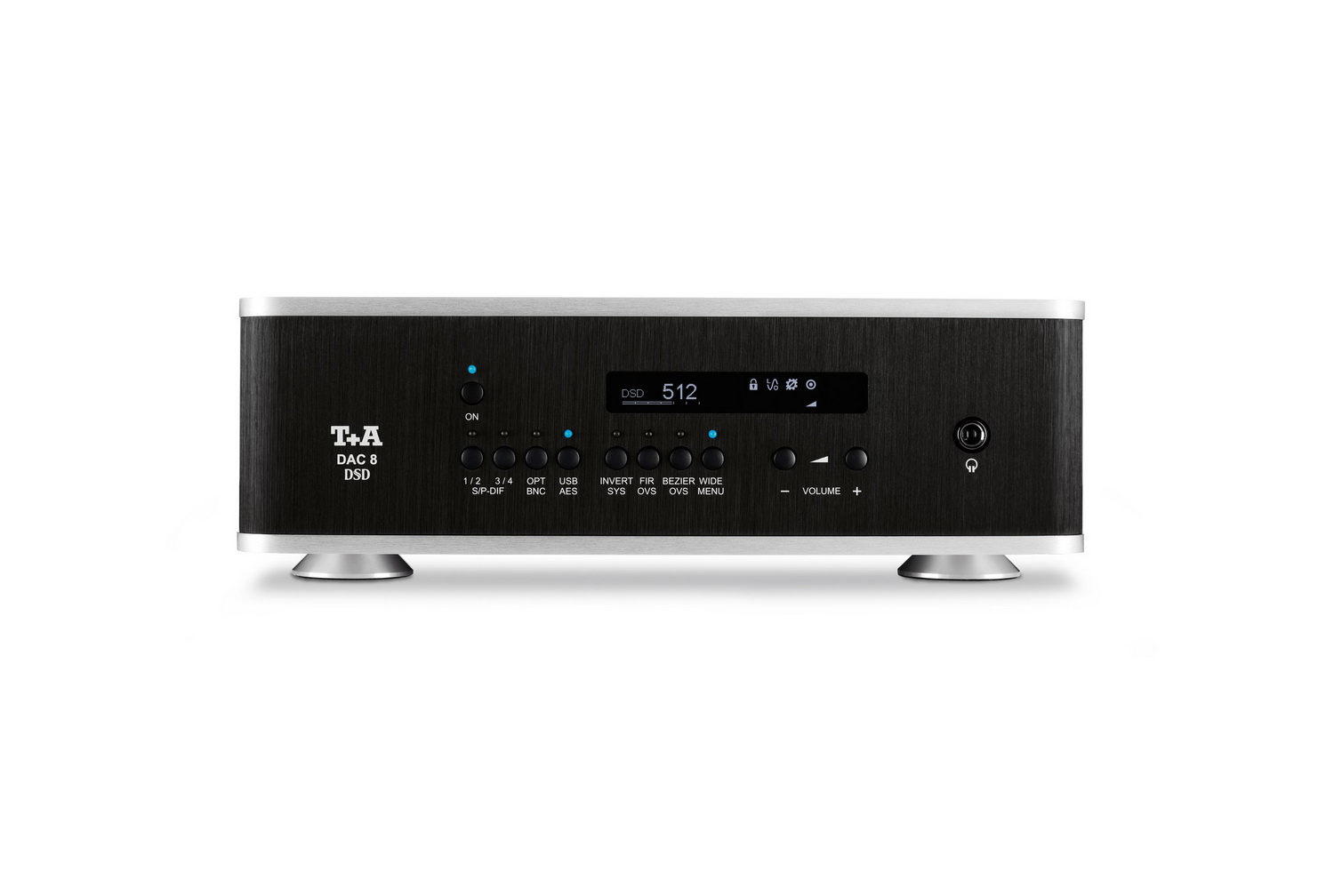
Fundamentally our new DAC 8 DSD is capable of doing everything necessary to
convert every form of digital source into analogue signals at the very highest
quality, including DSD right up to the highest possible resolution. We have
again further improved the unit’s outstanding pre-amplifier, and incorporated a
volume control of fully analogue construction based on High-End Melf resistors.
The “State of the Art” output stage is of fully symmetrical design and discrete
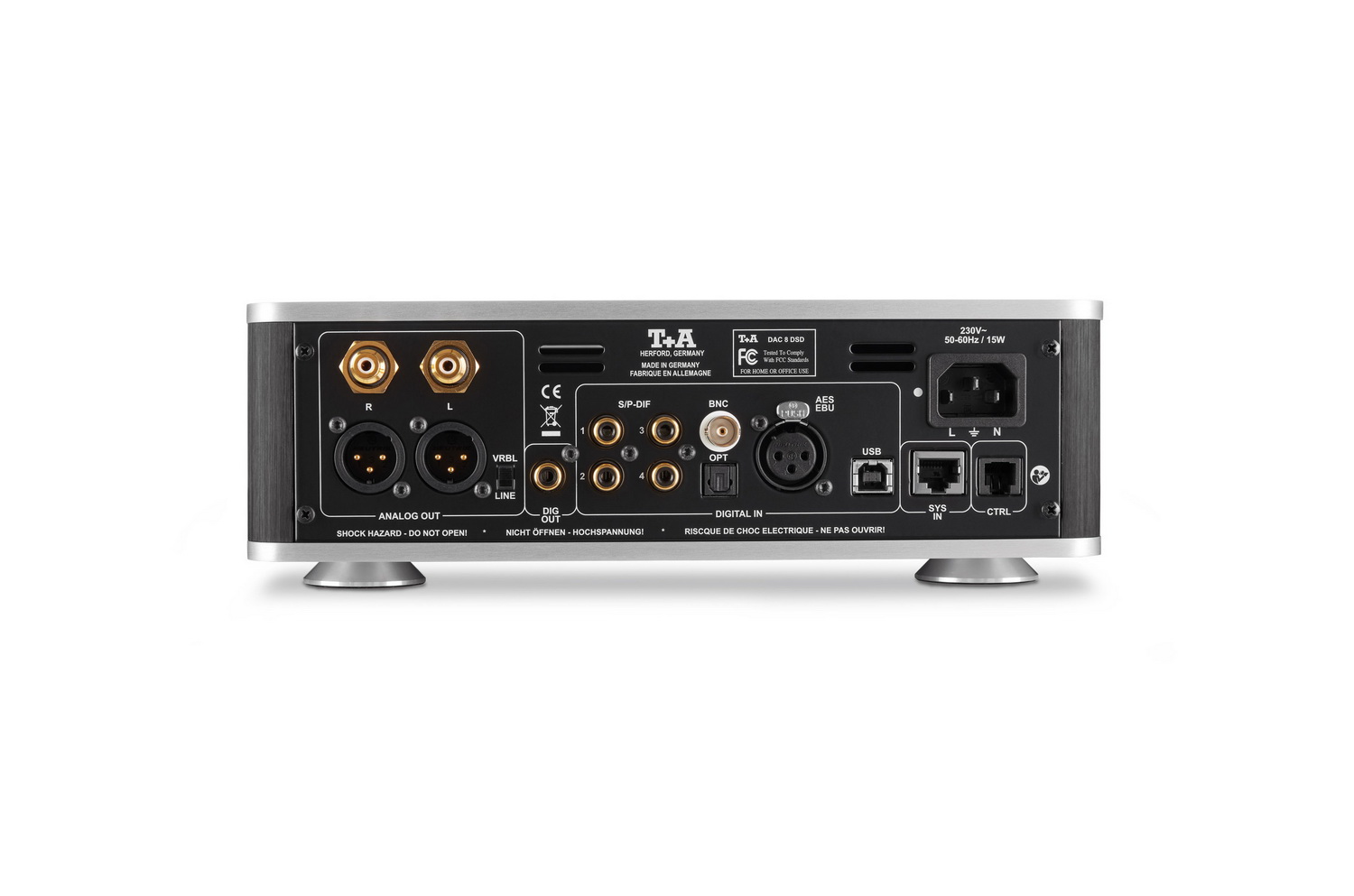
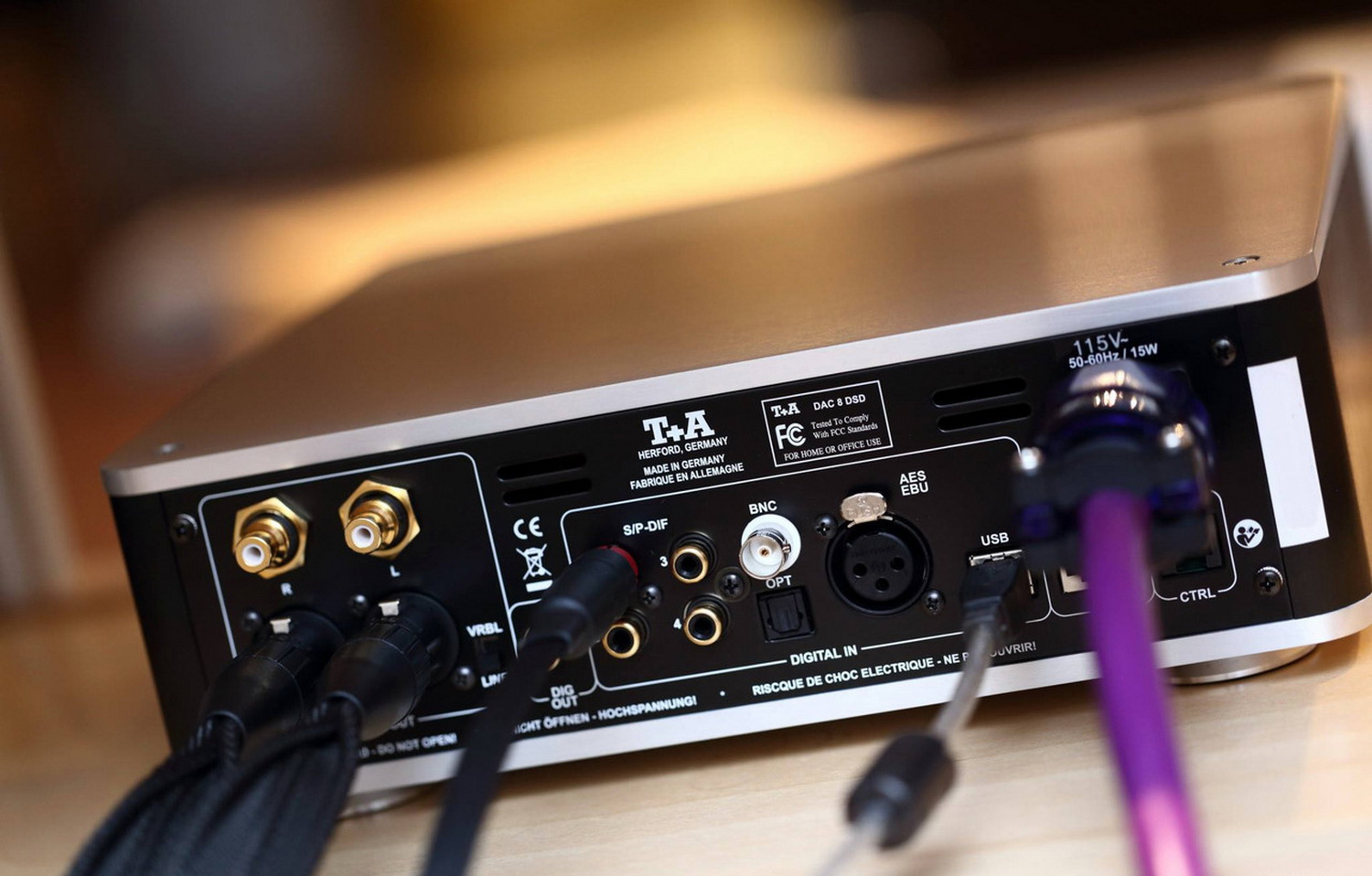
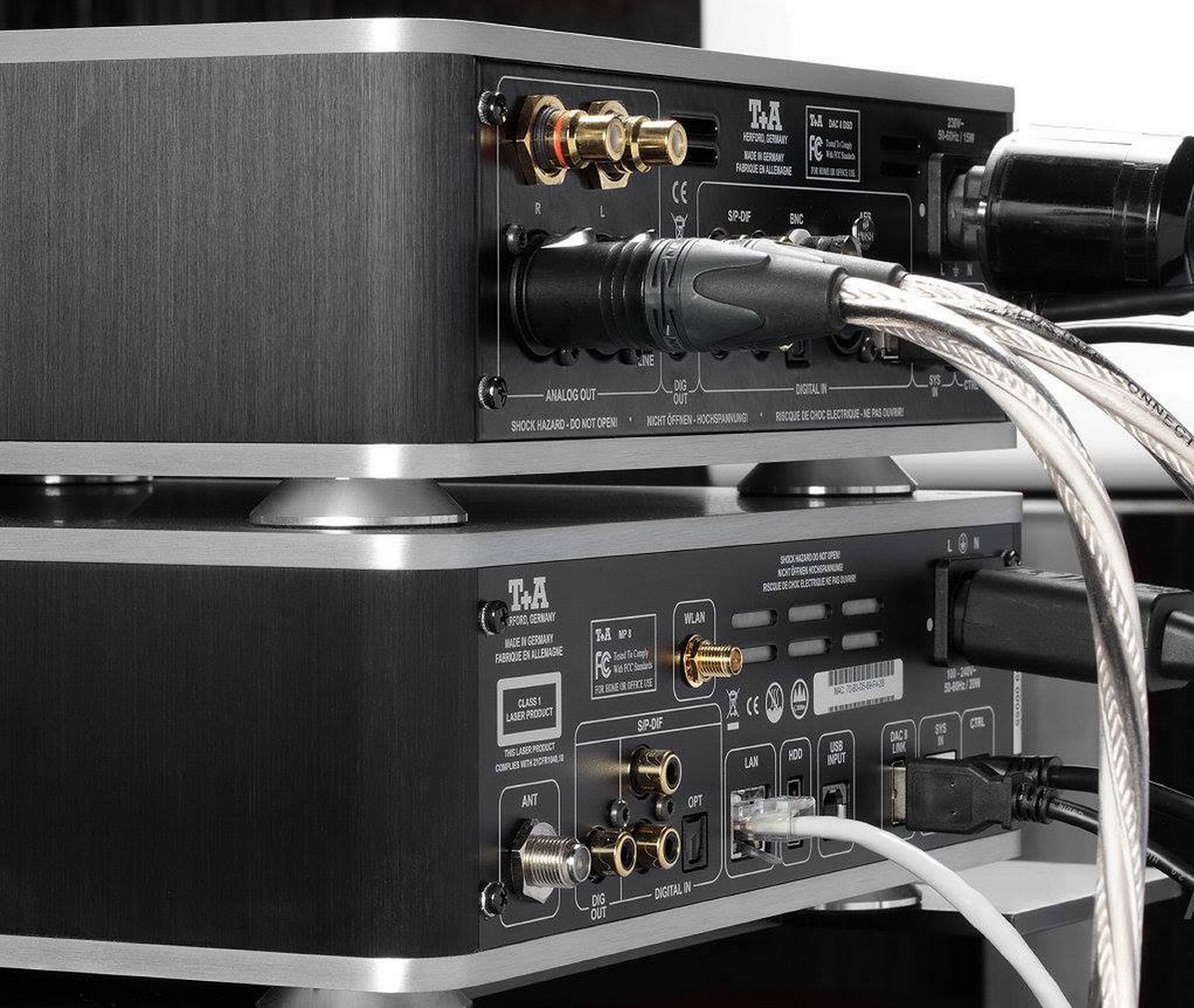
construction. Its impedance is very low, and it is equipped with symmetrical(XLR)
and asymmetrical (RCA) outputs. These features make the DAC 8 DSD more than
just a High-End converter: it is also a High-End pre-amplifier of supreme
quality.
The seriousness of our claim that the DAC 8 DSD is one of the world’s
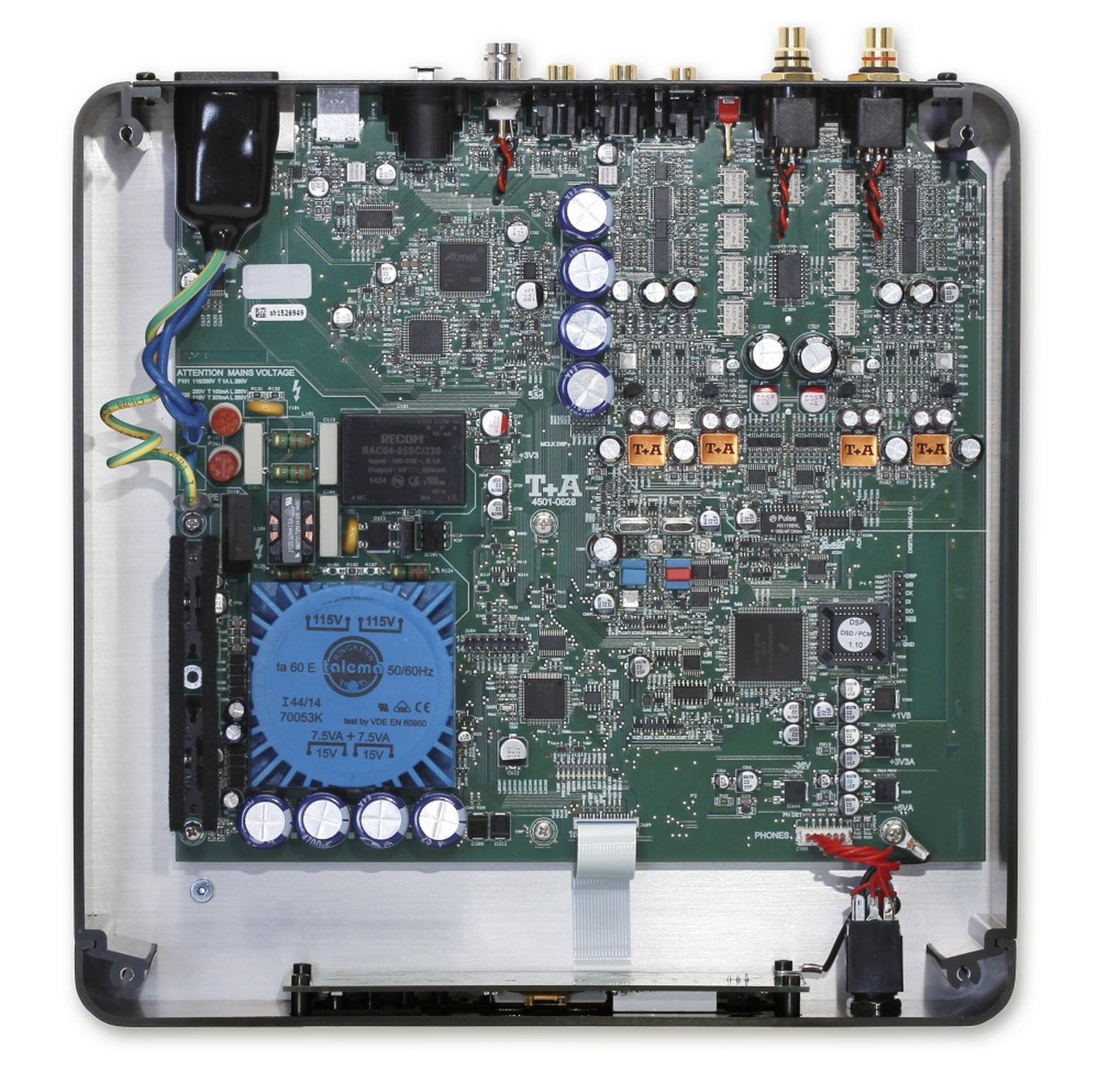
finest high-end converters can be judged by the fact that we employ two
separate, sophisticated mains power supplies for the analogue and digital
sections. A volume control is another unusual feature in a DAC, but it makes
good sense if the user wishes to install active loudspeakers, or employ the DAC
8 DSD as a pre-amplifier in conjunction with external power amplifiers. The
volume control is of highly refined design, and exploits analogue control
elements down to low volumes, as they avoid any loss of dynamic quality even at
low listening levels. Two gold-contact relays are provided to by-pass the
volume control, i.e. it can be removed entirely from the signal path when not
required.
We placed particular emphasis on the development of a very good headphone
amplifier with the ability to handle high currents. This further widens the
practical applications of the DAC 8 DSD.
The core of the DAC 8 DSD is the converter. As in our high-end players this
device also employs the superior quadruple arrangement with eight 32-bit
converters from Burr-Brown in a double symmetrical circuit. This circuit
provides perfect compensation for non-linearities, and the residual background
noise – which is excellent in any case with the 32-bit converters we employ –
is reduced by approximately a further 6 dB. The result is a dynamic performance
which is hardly capable of improvement, with a perfect “black level”, extreme
linearity and freedom from distortion, even in critical passages and the most
minute musical details. Oversampling is carried out by a modern 56-bit signal
processor, for which T+A has developed algorithms specific to our equipment,
offering perfect timing characteristics. They are based on Bezier polynomials:
Bezier interpolation and Bezier / IIR combination. A standard FIR filter and a
short FIR filter are also provided. These options make it possible to select
the optimum sound quality to suit the individual piece of music. The DAC 8 DSD
can even invert the absolute phase of the audio signal at the digital level,
and thereby correct material recorded with incorrect absolute phase.
For the purpose of handling DSD data which can be supplied via the PC-USB
input we have developed a unique, dedicated converter: the T+A True One Bit DSD
Converter. This is of fully analogue construction and constitutes a genuine
one-bit converter, since – unlike other manufacturers – we did not want to use
the DSD mode of a PCM converter. This development ensures that DSD data are
processed in a genuine one-bit stream process, uncoloured and without detrimental
additional conversion, as in our PDP 3000 HV High-End DSD / PCM player.
Fifteen long years ago we developed a means of galvanically separating the
converter from the analogue section for use in our high-end players: this
provides complete galvanic isolation of the digital section from the analogue
section using extremely fast digital isolators made by Silicon Labs in the DAC
8 DSD. The result is to prevent any interference from the source devices
finding its way into the analogue section. Computers, in particular, generate
enormous levels of interference noise which would ruin the superior sound
qualities of the audiophile output stage without this measure. The “State of
the Art” analogue stages are of fully discrete and symmetrical construction, and
do not employ OP-AMPs. Their linearity is not a function of “hard” negative
feedback, as is typical of OP-AMPS, but rather due to the quality of the
circuit design and the components employed, which are selected and matched to
very fine tolerances. A further unique feature of the DAC 8 DSD is its
switchable analogue bandwidth, which has already proved so effective in our
high-end players. The limit frequency of the DAC 8 DSD’s analogue
reconstruction filter can be switched between 60 kHz and 120 kHz; the “ultra-wide”
120 kHz setting is the key to perfect frequency response and phase
characteristics when used with power amplifiers with a broad-band output – such
as those in the T+A range, naturally. The phase linearity and signal fidelity
of the “ultra-wide” circuit also has a perceptible effect in the audible range,
and allows an open sound image with phenomenally clear positioning and
ultra-lively dynamics.
Читать далее...


 В наличии

 Записаться на прослушивание



 В наличии