You may know, with countless digital audio-related data, that it is imperative that digital audio devices have clock signals.
The digital audio devices express very delicate audio signals using a digital data comprised of ‘0’s and ‘1’s, and although the digital audio devices can also transmit the audio signals to other devices, the digital audio signals have to be converted eventually to analogue signals to reach us because the digital data cannot be felt or understood by our senses. This process is called a Digital to Analog Conversion, and the digital data in this process is converted to an analogue signal in response to a signal (clock signal) where ‘0’ and ‘1’ are repeated at a predetermined time interval.
Theoretically, although a perfect clock signal must repeat ‘0’ and ‘1’ at a predetermined time interval, the perfect clock signal unfortunately does not exist in this world. All clock signals have a time error, and a more perfect analogue signal can be made when the number of errors grows fewer.
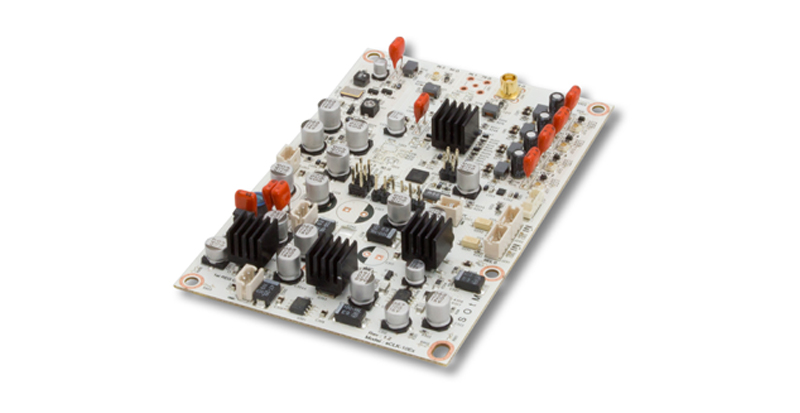
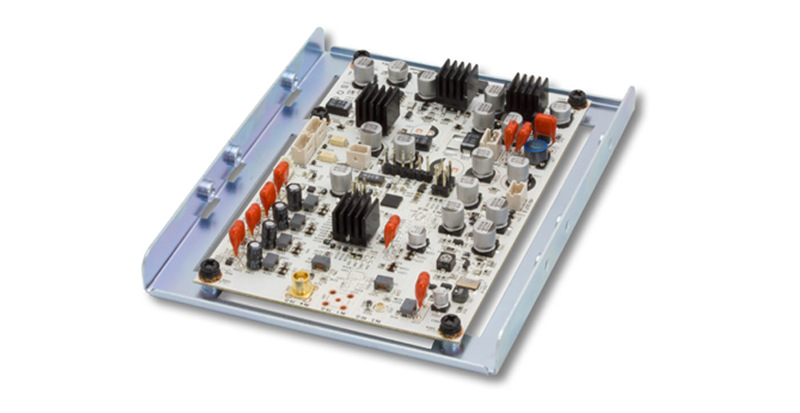
The time error, that is, the accuracy of clock is measured and managed not in the digital domain, but in the analogue domain such that the digital audio may be called a part of the analogue audio domain. A method to more easily and more clearly understand and feel the accuracy of the clock is to experience the sCLK-EX, which is a clock module of SOtM.
If you have ever experienced at least once the sound changes in an audio system incorporating an sCLK clock module, there will be no need for further deliberate explanation of what results can be obtained when the sCLK-EX clock module is used. It is on another level in terms of function and audio quality.
The sCLK-EX can be used for all digital devices that require clock signals such as a DAC, a USB host card, a CD player, a PC main board and a LAN controller. The sCLK-EX can simultaneously use four (4) clock outputs so that one single sCLK-EX board can be used for various frequencies including the system clock, LAN port clock and USB clock in your PC.
Furthermore, the device can be used synchronously with a high precision clock such as a rubidium clock by using the Master clock option.
You can easily reach a completely new sound stage with a single sCLK-EX board. You are requested to please experience a different dimensional world brought by sCLK-EK, which is an upgraded version approved by already advanced technology and sound.
Key Features
• Custom designed ultra low phase noise oscillation circuit
• Isolated differential clock signal distribution
• Four outputs clock
• Wide operating voltage input range
• Ultra low noise regulator circuit
• External master clock input
• Clock control input
Single clock frequency for interface system
sCLK-EX12 : 12MHz
sCLK-EX25 : 25MHz
sCLK-EX48 : 48MHz
sCLK-EX22/24 : 22.5792MHz / 24.576MHz selectable by SEL0 input
sCLK-EX45/29 : 45.1584MHz / 49.152MHz selectable by SEL0 input
Optionally other frequencies available
Dual independent clock frequency for digital audio system
sCLK-EX1412 : 14.318MHz, 12MHz
sCLK-EX1448 : 14.318MHz, 48MHz
sCLK-EX1425 : 14.318MHz, 25MHz
Optionally other frequencies available or selectable by SEL0, 1 input
Triple independent clock frequency for mother board & interface
sCLK-EX142512 : 14.318MHz, 25MHz, 12MHz
sCLK-EX142548 : 14.318MHz, 25MHz, 48MHz
Optionally other frequencies available or selectable by SEL0, 1 input
Quad independent clock frequency for mother board & interface
sCLK-EX14252612 : 14.318MHz, 25MHz, 26MHz, 12MHz
sCLK-EX14252648 : 14.318MHz, 25MHz, 26MHz, 48MHz
Optionally other frequencies available or selectable by SEL0, 1 input
Читать далее...


 В наличии

 Записаться на прослушивание


 В наличии